So, here’s a thing I’ve been thinking lately. What is pride? What’s going on when we think or say ‘I’m proud of that?’ Well, I guess a lot of things might be going on, and it depends on context, and all that good stuff. But let’s say we’re going after the kind of pride that many religions point to as a bad thing. And let’s say that – putting to one side any misgivings we might have about this kind of evaluative language – we are going to assume that there’s some wisdom here even if, ultimately, we are not going to fully endorse all the implications of the word ‘bad’. So, I think that perhaps the feature of behaviour that is being singled out here is the behaviour of attributing the cause of an achievement entirely to the proud self. Let me say that another way. Say, I write a poem and I think it’s nice and I say, ‘I’ve written a great poem. I am really proud of it’ then that pride is the ‘bad’ kind to the extent that I am believing that and acting as if no one and nothing caused this poem to come into existence apart from me. It is uniquely my achievement. I am the God of it. When I put it like this, I guess it starts to become pretty obvious why a religion that advocates belief in an all powerful God might have a problem with this. The proud me is failing to show due humility and deference to the almighty. But let’s say I don’t believe in God or, at any rate, don’t believe in the idea of a creator who stands at the beginning of time and writes the world into existence like a poem that only they are the cause of. Is pride still ‘bad’ then?
I am finding that where I increasingly end up is in concluding that pride may or may not be ‘bad’ – I mean, I’m not God, who am I to arbitrate over whether something is definitively ‘bad’ or not? – but from the perspective I hold it is logically incoherent. ‘Everything is connected.’ It is an over-used phrase and, like all over-used phrases, it’s easy for it to become emptied of meaning, so let’s try to fill it back up a bit. As I sit here, my sitting is only possible because I was born at a particular moment and location in time and space, a highly improbably event which required every single thing that had already happened to have happened in exactly the way they did (mum and dad had to meet, and their parents and theirs etc…). And to bring things more up-to-date, my sitting is only possible because I have a chair to sit on that I did not make, and a body that I did not make to sit on it with, and my description of all of this is only possible because I was born into the body of a species that has evolved to speak and communicate using words that pre-existed my existence. Some of these words right here have been around for centuries. I wonder who the first person to call a chair ‘chair’ was and what ‘chairs’ actually were before that momentous act? Fun times! Everything is connected. Nothing can happen, no one can do anything, without conditions which allow – allow or compel? – that event to unfold, that act to be done. Pride from this perspective makes very little sense. If I happen to write a poem that’s ‘good’ in my eyes, or in yours, then I am really glad about that. I am grateful for that. But I am not the sole cause of it. I did not do that. I played my part, in the sense that without me it could not have been, but then so did you, so did everyone and everything else.
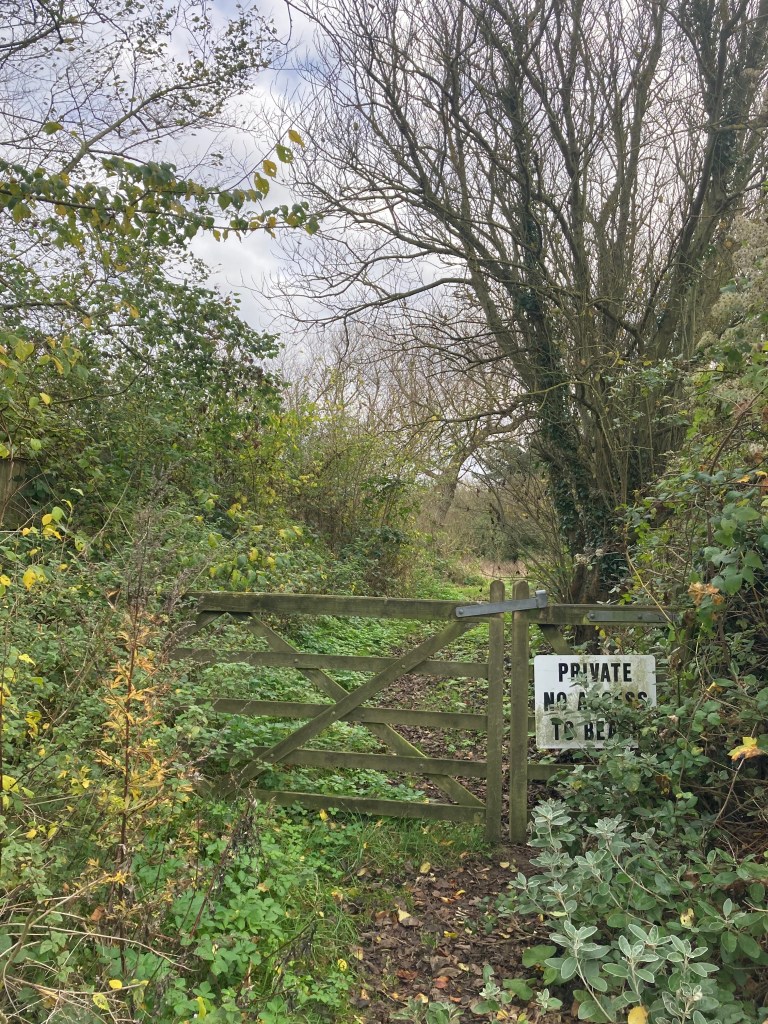
Why the photo? ‘PRIVATE NO ACCESS TO BEACH’ I think it says rather haughtily. Well, I picked the photo, because I want to extend my point to suggest that just as pride makes no sense from this perspective nor does the concept of property, of mine and thine. I mean, of course, within the individualistic, capitalist consumerist cultural goldfish bowl that most of us swim in, these words do have meaning. Of course, we inhabit nation states with legal frameworks largely dedicated to protecting our property against the property-less. We tell ourselves that we earn what we own, with our labour, with the sweat of our brow. And if we are fortunate enough to inherit wealth, we tell ourselves a similar story about our ancestors – they worked hard, it’s only fair that they should be able to hand it down etc…We forget that, as Proudhon said, all property is theft. We forget that our ancestors did not earn, they simply took. You don’t take it with you, people are fond of saying. True, you don’t. But that phrase should not, from this perspective, be an injunction to consume it all quickly before you take your last breath. It should not be a cue to spend the kids’ inheritance. The phrase should give us pause for thought. Maybe we don’t take it with us because IT IS NOT REALLY OURS. How can the star dust of which we are made, the sub-atomic particles that have existed since the beginning of time and even since before that, how can any of this stuff, even one tiny speck, be said to belong to any one person any more than to anybody else? It’s amazing, it’s a miracle, it’s a mystery, it’s inexplicable, but it does not belong to anyone, not really, whatever ‘really’ means. It is just what it is. Everything that we have, our bodies, our houses, our possessions, all of it is simply on loan, a gift from the universe, for us to receive with gratitude, and share with an open heart and open arms. So, that’s ‘my’ offering for today. I am not the first to say something like this, but I am grateful to be able to say it in just this way on this particular day, sat right here in my blue towelling dressing gown, as I prepare to launch myself into another day: see if you can try this approach on for size; when you notice pride try backing up a bit, remind yourself of everyone and everything that contributed to this moment, and do gratitude instead. And instead of piling up treasures in the dark vault of your heart like a miserly old Scrooge, open the curtains, let the light in, smell the fresh air, taste the beauty, taste it and love it and share it with everybody.
 Yes To All Of It